A Trauma-Informed Writing & Wellness Practice

Survival Kit Writing Collective

An online writing community that cares about writers as whole people who are processing, living, and creating at the same time. A space for writing through trauma, together. We are not content machines. We have bodies. Moods. Tuesdays.

Build Your Own Writing Survival Kit: 5 Days to Slay Your Ghosts (free course)

For writers whose process doesn't look like anyone else's, and who've been treating that as a problem.

    Community opens July 1, 2026.

    Facilitated by Erik Fuhrer. Author of eight books. Featured in Psychology Today. Ph.D., University of Glasgow.

    "Erik's teaching helped me transform the traumatic events in my life into art. I started to release a lot of pain that I experienced into light and to have a greater sense of compassion for myself."

    Here's What This Is

    The method: Writing directly about difficult material, or through persona, myth, genre, and form. Whichever feels safe, productive, and generative for you. The community: An online writing community with daily practice, weekly co-writing sessions, monthly trauma writing workshops and craft seminars. Three tiers based on how much feedback and guidance you want. The facilitator: Erik Fuhrer. PhD in Creative Writing. 72+ workshops facilitated. Author of eight books. Featured in Psychology Today. The first step: A free 5-day email course. Five prompts. No commitment. Community opens July 1.
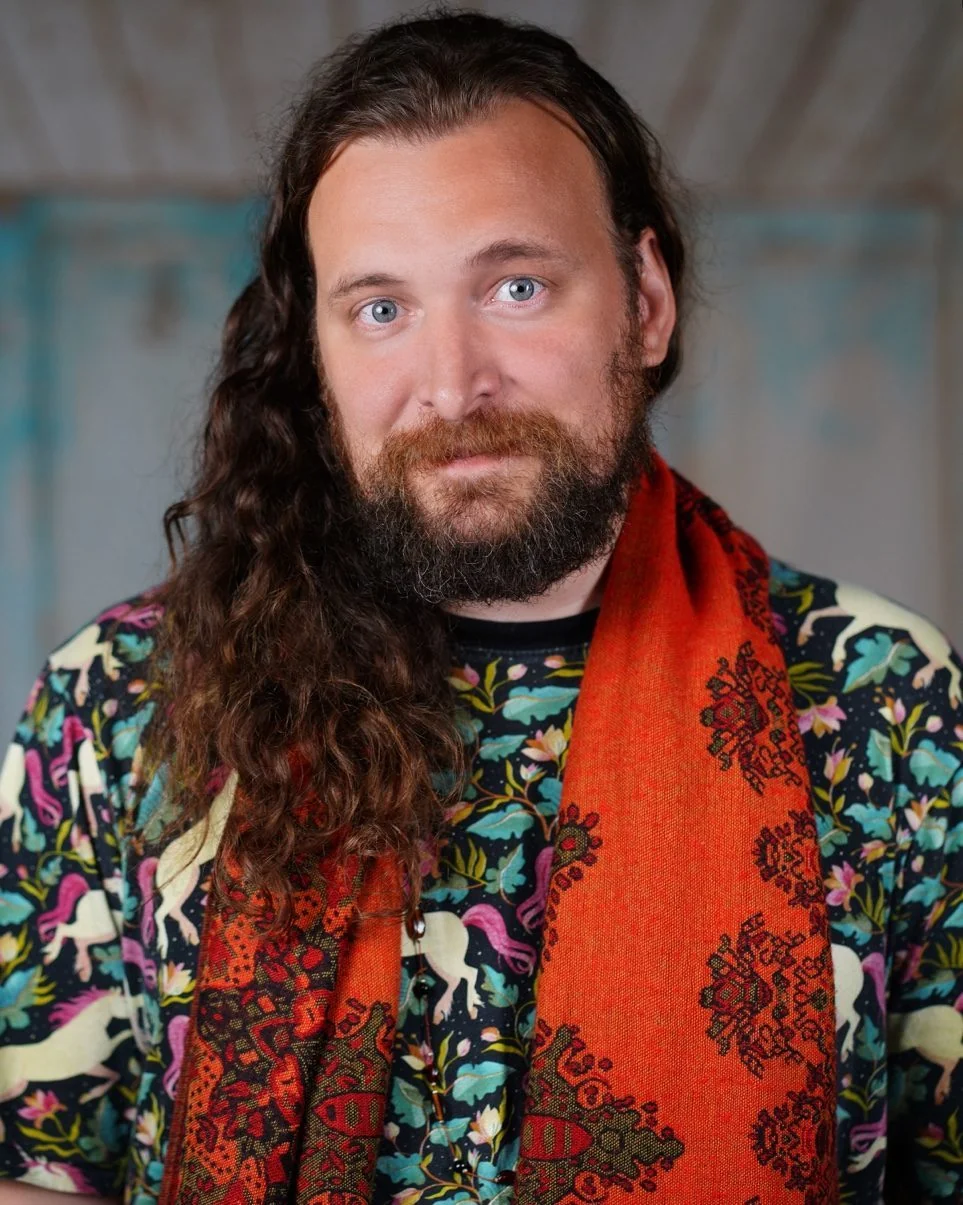
    Erik Fuhrer wearing a colorful unicorn shirt and red scarf

    Put Down the Umbrella

    A space to stop doomsday prepping for the next storm.

    Someone told me once that when I spoke with my abuser, I needed to bring an umbrella, to protect myself from the inevitable storm of those encounters. But umbrellas rarely hold in storms like those. They upend. They fly away. At least for me. There I go, literalizing metaphors again.

    I've been part of so many spaces in my life that had the trappings and signals of safety but were ultimately not safe, because of certain people, or certain policies, or both. As a queer person, I found it difficult to locate safety in spaces often built and protected for cis, white, heterosexual men. For a long time, I believed that being safe meant morphing myself into more palatable shapes and forms.

    A big aspect of queerness is feeling unhomed and the imperative to build a new, safer home. This is inner work. It is also writing work. In this space, those two things happen at the same time. This is a human feeling, though it beats deep in queer hearts that are constantly taught that they are empty or dysfunctional.

    My most recent book, Gellar Studies (Spuyten Duyvil, 2023), uses Sarah Michelle Gellar's film characters to unfold narratives of queer trauma. My memoir, My Buffed Up Life, uses Buffy the Vampire Slayer as a fictional interlocutor to write through personal trauma and memory. I am not asking you to do anything I have not done and continue to do.

    I built this space so we can put our umbrellas away and have a support system. If the rain comes, we weather it together.
    "Erik is a treasure. I would happily take a course with them again."

    Writing and Wellness in the Same Room

    This space facilitates both craft and self-care because you can't separate the writer from the person.

    Here's what I know from years of teaching people to write through trauma: you cannot show up to write about trauma if your nervous system is still running the show. The page becomes another place that demands performance. Another room where you have to hold it together.

    That's why this space does both at once. You'll find weeks where the prompt asks you to move your body before you write, or to draw before you draft, or to sit with a single image for ten minutes before putting a word down. And you'll find weeks where we dig into line breaks, or structure, or how to build a braided essay. Both are here, because both are necessary.

    The craft prompts teach you how to build the house. The mindfulness prompts help you actually live in it. If you have been doing shadow work, inner child work, or any practice that asks you to look at what you carry, this is the writing space built for that.

    Every month includes prompts, group chats, and live events, craft and mindfulness together, so you can participate at the level that fits your life.

    "Erik validated that I could do this. I appreciate all of their feedback and the tender way they teach."

    Who This Is For

    An online home for writers writing through trauma at every level of experience. No matter where you live.

    Some members have written for years, while others are beginning serious writing for the first time.

    If trauma sits in your body and you've been wondering how to move it into language without it costing you everything, you belong here.
    If you're carrying a story that tried to bury you and you want to be the one holding the shovel, you belong here.
    If you have survived this world and don't want to carry that umbrella into every space anymore, this space invites you to put it down.
    If you hold space for other people's stories all day and have never had a space for your own, you belong here too.

    Doors open July 1. Start with the free course.

    Build Your Own Writing Survival Kit: 5 Days to Slay Your Ghosts (free course)

    For writers who've been in spaces that claimed to be safe but weren't.

      "Through working with Erik, I became much more knowledgeable about the craft and what it takes to become a storyteller. On a personal level, it helped me transform the traumatic events in my life into art."

      What You Might Be Imagining

      This is not an exposure workshop or a forced disclosure space; it is writing that moves at your pace.

      You hear "trauma writing" and you picture something specific. Everyone crying. Everyone confessing. Everyone is bleeding all over the page. Maybe we are all going to look like those wraiths from Harry Potter. Maybe it is going to be depressing in there. Maybe someone is going to tell you what your life was really like.

      I get it. That sounds terrifying. It sounds like a costume party where the costume is your worst memory, and you did not even want to come.

      That is not what this is.

      Most of the people I have worked with do not want to write "light" things. They come in carrying something: a person, a moment, a memory, a pressure they can feel in their chest. But they are terrified of what writing it might cost them.

      What if people do not believe me?

      I heard that my whole life when I sought help. "Pictures or it did not happen" is not just internet troll speak. In this space, your experience is not up for debate.

      What if my abuser, or the person I survived, reads this?

      Those people will think nothing unless you choose to share. And you never have to. And if you decide you want to, you can think critically about that once you have it written.

      What if I have to say everything?

      You do not. This space is built around the idea that you do not owe disclosure in order to write truthfully.

      What you learn here is how to let the writing and the craft carry the weight, instead of your nervous system.

      "These were deep experiences. I really appreciated that Erik touched upon the most vulnerable topics, and we could talk about them, voice them, admit that we wanted to write about them."

      About Safety

      I don't use the word "safe" loosely. I've been in too many spaces that used it loosely.

      This is not a space where someone sits in the corner and tells you what your work should be based on their guidelines of good writing. We go by what the author thinks. That is the voice we honor every time we discuss someone's work. Always.

      No one is ever required to share anything. You can show up to read, to listen, to think, to write privately. Part of what makes us good writers is being good readers, and part of the way we know what we want to write is by listening to what other people write.

      If someone ruptures the safety of this space, this will no longer be a space they are invited into. I've never had to enforce that. But I say it anyway, because safety isn't implied. It's designed.

      I can't promise perfection. But I can promise that I will always actively seek to be aware of people's needs, actively build around them, and listen more than I speak. Hopefully, in this space, we can put away our umbrellas.

      "Erik encouraged us to try new things without any pressure. I became much more knowledgeable about what it takes to become a storyteller."
      Choose Your Kit

      Three Kits. Same Ethos of Care.

      Every kit includes the Daily Kit Bag, craft and mindfulness prompts, and a community that holds space.

      What a typical week looks like

      Monday morning, the Daily Kit Bag drops: a gratitude prompt, a noticing exercise, and a space to name what you're working on. Midweek, a co-writing session on Zoom where you write from a prompt or your own project for 90 minutes, with time to talk through what came up. An asynchronous prompt lands that alternates between craft and mindfulness. On weekends or evenings, one of the month's live events: a craft seminar, a guest reader, a journal discussion, or a workshop where you bring work and hear what's landing. The AMA thread is open all week. Erik responds Fridays.

      The Explorer Kit

      How do I start writing about this?

      Generate & Discover

      $99 /month
      The Daily Kit Bag: daily gratitude, noticing, and naming what you're working on.
      Weekly co-writing sessions: 1.5 hrs, synchronous. Write from prompts or your own project, with time to discuss challenges and receive support from Erik and the group.
      Weekly asynchronous prompts: alternating between expressive modality prompts (mindfulness, self-discovery through writing, art, and movement) and craft-focused exercises.
      1 guest reader/month: a writer reads and discusses their work around writing trauma. 1.5 hrs.
      1 craft seminar/month: run by Erik. Presentation, group discussion, writing time, Q&A. 1.5 hrs.
      1 on-the-spot workshop/month: bring work, read it, receive feedback on what's working and what we want more of. 2 hrs.
      1 journal discussion/month: read a journal together, discuss audience and fit, optionally submit. 2 hrs.
      Optional peer review groups: Erik sets up Zoom groups for independent feedback sessions.
      Weekly AMA thread: open all week, Erik responds Fridays.
      The Workshop Kit

      How do I make what I'm writing better and get it into the world?

      Shape & Publish

      $250 /month
      Everything in the Explorer Kit.
      2 intensive workshops/month: 3 hours each. Each participant has the opportunity to have their work workshopped once per month.
      Submit up to 3 pages of poetry or 10 pages of prose for detailed workshop feedback from Erik and the group.
      Individualized publishing guidance: where to submit, how to think about audience and fit, cover letters, and navigating the literary world.
      Weekly group check-in thread: ask questions, share good news or struggles, get writing support from Erik and the group.
      The Developmental Kit

      How do I bring all of these pieces together into something larger?

      Build Something Whole

      $500 /month
      Everything in the Workshop Kit.
      Voxer access to Erik: ongoing back-and-forth with 48-hour response. Ask about writing, revision, publishing, social media, anything related to your writing life.
      Feedback on 10,000 words every 3 months: a deep editorial read on a substantial section of your project, in addition to your regular workshop submissions.
      A phased, guided path through five stages at your own pace, with Erik as your close reader and guide:
      1. Gathering: generating material, exploring entry points through persona, myth, pop culture, fragment, braided narrative. Discovering what wants to be written.
      2. Finding the Shape: identifying the project, the form, the connective tissue between pieces.
      3. Building: drafting toward a whole, with Erik's written feedback and Voxer support throughout.
      4. Revising: workshop, structural feedback, craft refinement.
      5. Completing: final polish, and if desired, guidance on submission, publishing, or what comes next.
      Ideal for chapbook-length collections, essay sequences, hybrid work, or a section of a longer manuscript. No fixed timeline. The work moves at your pace.

      Every kit includes: The Daily Kit Bag practice. Craft and mindfulness prompts. Curated readings. A community of people doing this work alongside you. An ethos of care.

      All feedback in every kit is individualized toward your voice and your style. You will never be asked to write like someone else. You will be helped to write more fully like yourself.

      None of this is therapy. This is a writing and wellness practice. Healing often happens inside it. The focus is always on the craft, the community, and the process.

      Start with the free 5-day course. Community opens July 1.

      Build Your Own Writing Survival Kit: 5 Days to Slay Your Ghosts (free course)

      For writers who want to write through hard things without burning themselves down in the process.

        Your Facilitator

        Erik Fuhrer (they/them). Queer, nonbinary poet and scarf tie aficionado whose fashion sense is part Buffy Summers, part Blanche Devereaux, and part the lion from The Wizard of Oz. Author of eight books. Featured poet, 32nd Annual Virginia Woolf Conference. 2024 final judge, UCLA Allegra Johnson Writing Contest. Ph.D. in Creative Writing, University of Glasgow. Featured in Psychology Today. Full bio.

        Frequently Asked

        Do I need writing experience to join?+

        No. But all of us are already writers in some way. We text, we write emails, reports, letters, social media posts. If you are interested in writing creatively, maybe it's time to start calling yourself a writer. The collective will give you tools to explore that identity and practice.

        Do I have to write about my own trauma?+

        No. A lot of people come to me because they want to write specifically through trauma. Other people are writing about trauma but not about their own. And even if you are writing through your trauma, this does not mean you have to write directly about it. That's what this collective really does: helps you find genres and forms to write about difficult topics and content in ways that feel safe, productive, and generative.

        Do I have to share my writing with the group?+

        Not in the Explorer Kit. In that kit you are invited and provided space to share, but you never have to until you're ready, and if you never are, that's fine too. The Workshop and Developmental Kits are aimed toward revision and drafts, so sharing in those spaces will happen frequently. People who sign up for those kits are specifically looking for in-depth feedback, though you will always be able to set boundaries on the type of feedback you're looking for.

        What happens in the live sessions? When are they held?+

        It depends on the session. All kits include live craft sessions where I lead us through a craft topic, guest speakers where a published author discusses writing trauma in their own context, co-writing sessions with structured time to write and discuss obstacles and solutions together, and sharing sessions where you have space to read your work and receive on-the-spot feedback focused on what's working and what the room wants more of. No workshop-bro energy that co-opts your work into someone else's voice or shreds it because it's not theirs. Promise.

        Sessions will mostly be during evenings and on Saturdays, all PST, mostly starting around 6pm on weeknights and 10 or 11am on Saturdays.

        For the Workshop Kit, workshop sessions will be scheduled in the evenings and/or weekends. If this tier grows, we will add more workshop groups and try to accommodate people's schedules when scheduling new workshops. Workshops are all capped at 10 people.

        What if I can't make a live session?+

        The craft sessions and guest speakers will be recorded. The co-writing and sharing sessions will not be, because I want people to feel comfortable writing, discussing, and sharing, and not recording helps with safety in those spaces. I will also create an asynchronous option for the co-writing sessions. You are always welcome to email me to touch base. There is also an asynchronous prompt each month that you can do whenever you'd like. As the community develops, I can set up private groups for people who have formed bonds and want to meet on their own.

        If you miss a workshop in the Workshop or Developmental Kit, you can email me to catch up. If you miss a day you are scheduled to be workshopped, email me so we can reschedule your time.

        Is there a minimum commitment? Can I cancel anytime?+

        If you sign up month to month, you're committed to finishing the month you paid for but can cancel at any time before the next month renews. If you sign up for the year, you're committed to finishing the year.

        Is this therapy?+

        No. I do not have a clinical license. My PhD is in creative writing, and I have run writing courses, DEI workshops, and implicit bias workshops. My expertise is in building intentional spaces that are safe and brave for participants. While your life may inform your writing, and is welcome to be referenced in relation to the writing and your writing process, as this collective is about the wellness of the whole person, it is still writing-focused.

        How do I know which kit is right for me?+

        The Explorer Kit is for people who want to develop a steady writing practice and explore different pathways for writing through and about trauma and other difficult material, without the pressure of formal workshops or feedback structures. It is truly a place to explore. The Workshop Kit is for people working on something specific who want direct, communal feedback. This is more like a supportive and caring MFA workshop community. The Developmental Kit is for people who are really delving into a project, a book of poetry, a memoir, a novel, a collection or series of essays, poems, or short stories, and want 1:1 feedback from me.

        Can I switch between kits?+

        If you're month to month, it's easy. You just upgrade for the next month. If you're signed up for a year and want to change in the middle, email me and we'll set that up and prorate your kit.

        What if I'm not ready?+

        Then you're not ready, and that's fine. The free 5-day course is designed for exactly this moment. It asks very little of you. If after five days you want more, the collective will be here. If you don't, you got five good prompts and that's enough.

        What if I do it wrong?+

        There is no wrong here. There are drafts. There are attempts. There are pieces that don't work yet and pieces that surprise you. The only wrong thing would be for someone to tell you your experience isn't valid or your form isn't correct. That will never happen in this space.

        What if I feel too exposed?+

        You never have to share anything. You can write privately for as long as you need. And you don't have to write about it directly to write about it truthfully. Persona, myth, genre shift, fragment, these are all ways in. You choose the one that fits.

        I'm not queer. Is this space for me?+

        Yes, of course. This space does not discriminate. Everyone is welcome and everyone will be treated with respect and care.