For Clinicians, Founders & Mental Health Leaders
Survival Kit Narrative Strategy
Ghostwriting for therapists and mental health leaders. Thought leadership content that sounds like a person, not a brochure.
Start a Conversation
For Clinicians, Founders & Mental Health Leaders
Ghostwriting for therapists and mental health leaders. Thought leadership content that sounds like a person, not a brochure.
Start a ConversationYou run a practice. People trust you with the hardest things in their lives. You are a therapist, a recovery leader, a mental health founder, or a clinician building a public voice. You know the voice you want because you can hear it when you talk to colleagues. But you can't get it on the page while also seeing clients, managing a team, and running a business. You want someone who can hear you talk for an hour and come back with a draft that sounds like you said it.
That is what I do.
If your team needs help with conflict and communication rather than your public voice, reach out directly at erik@survivalkitwritingcollective.com.
At Notre Dame, I gave participants one text and complete freedom over form: one built a physical mask, one wrote an investigative essay, one wrote a second-person memoir. Same source material, three completely different arguments. Finding the form that carries a specific argument is the skill. I have been practicing it for over a decade.
The person Googling at 2 AM finds your writing and trusts it. The colleague at the conference says "I've been reading your newsletter." The methodology you've been refining for years finally has public language that does it justice.
At Iowa, a faculty member came to me because they could not articulate their specific methods on the page. The expertise was real but the language for it kept flattening. We found the through-line together and built it into a fellowship application. They secured the fellowship.
I did this work on myself first. I started in an academic jargon-heavy field and developed a voice that moved toward popular culture and public-facing work.
That's the outcome. Not content. A voice.
Ready to talk about your voice?
Schedule a Conversation15 minutes. No preparation needed.
Most engagements are six months. Through-line development and two essays per month at the lower end, four essays plus keynote development at the upper end. Small client roster so the voice stays yours. Pricing depends on scope.
Developmental editor on multiple published books, including Dr. Larry Ward's America's Morning: Night. Dr. Larry Ward was a senior dharma teacher ordained by Thich Nhat Hanh, co-founder of the Lotus Institute, and author of America's Racial Karma. He named Erik in his acknowledgments. Additional editorial work includes Bernie Anderson's Rutherford: Dare to Dream and several other manuscripts.
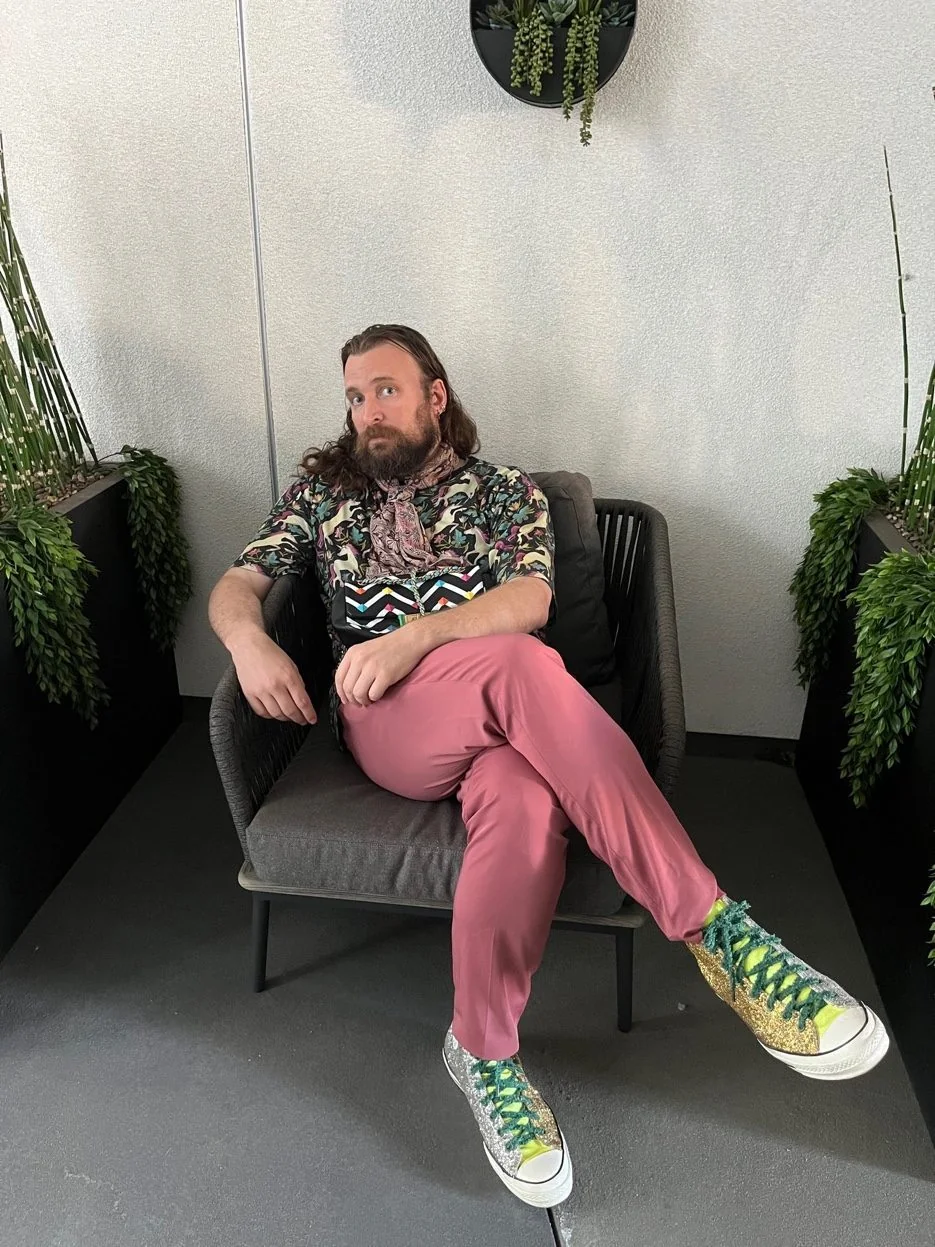
Your Partner
Erik Fuhrer, Ph.D., PMP. Founding editor, Hushlit (five years). Editorial assistant, ISLE (Oxford University Press). Helped graduate researchers and faculty translate their expertise into fellowship applications, grant narratives, and public-facing writing, leading to successful placements and awards. Author of nine books. Two-part Psychology Today feature. Analysis in an Edinburgh University essay collection. Full bio.