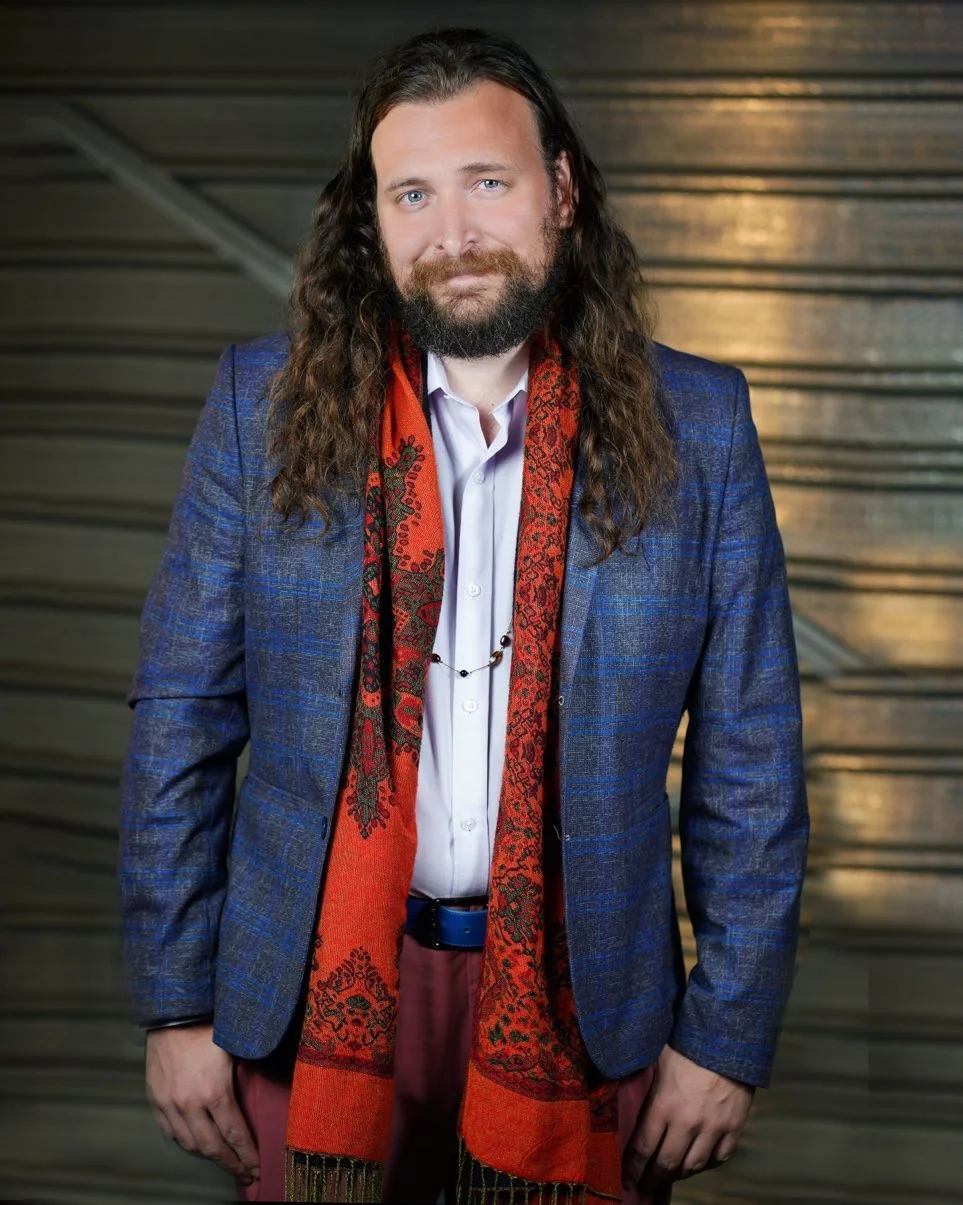
Erik Fuhrer, writing workshop facilitator, in a blazer and pink pants

For Organizations & Teams

Conflict Survival Kit Workshops

Writing-based workshops on conflict, communication, and implicit bias.

Book a Discovery Call

15 minutes. You tell me what your team is dealing with. I tell you whether this is the right tool.

72+ workshops facilitated. Six departments at the University of Iowa. 90% positive feedback at Notre Dame. Ph.D., PMP.

Your Team Has a Conversation It Keeps Avoiding

Someone needs to say something difficult to someone else. They have been thinking about it for weeks. They have rehearsed it in the shower, in the car, at 2 AM. And it keeps not working. Because every version they rehearse is from their own desk. Their own frustration. Their own version of the story.

Either way, the conversation isn't happening. And the longer it doesn't happen, the more it costs.

They have rehearsed it in the shower, in the car, at 2 AM. And it keeps not working.
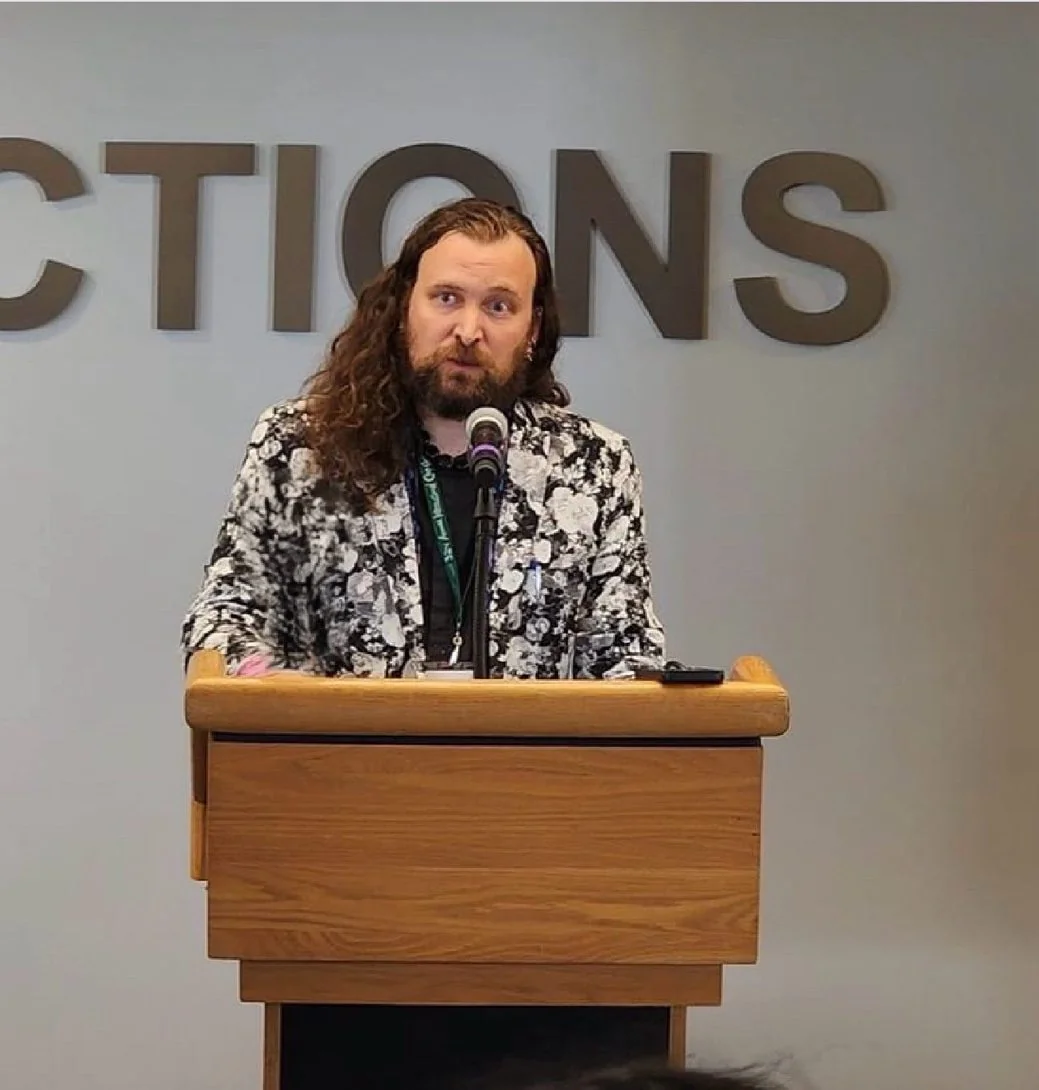
Erik Fuhrer reading at a podium

There are two kinds of conflict at work.

Capital-C Conflict: the person. The coworker who shuts down in meetings. The client who keeps moving the goalposts. The manager whose feedback leaves you smaller. These have a name and a face.

Lowercase-c conflict: the pattern. Different communication styles. The person who needs everything in writing paired with the person who wants to talk it out. Nobody's wrong. The styles just clash. And because nobody's wrong, nobody addresses it.

Most conflict training focuses on Capital-C. But lowercase-c is what grinds. It's the friction that compounds over months and years until someone calls it a "culture problem."

The Exercises

Everyone writes. Nobody is named. Nobody is exposed. The exercises change depending on what your team is carrying into the room.

Participants don't share exactly what they wrote. They share what they discovered and learned from the exercise. That is where safety is built in.

Persona writing: Pop culture characters, historical figures, and fictional stand-ins for you and the person you are in conflict with. Sometimes the distance is what lets the real thing show up on the page. Sometimes people write directly. Both work.
Compression: Say everything you need to say. Now cut it in half. Now cut it to one sentence. Now cut it to six words. What survives is the sentence you actually mean.
Perspective writing: Writing from the other person's position. Their role, what they are carrying into the room that you cannot see from your side. You can't unsee it after you've written it. For style clashes, people write from inside the other person's working style. Not their personality. Their process. "I need to think out loud because..." or "I need time after the meeting because..." When you see the style instead of the person, the friction loses its charge.
Genre shift: Describing your team's dynamic as a movie genre, a TV show, a narrative. The form makes the pattern visible.
Active listening: Partners take turns asking one question, listening for five minutes without interrupting, and reflecting back what they heard. Then each person designs a short tour for their partner based entirely on what they just heard, and takes them on it. People leave having paid genuine attention to a colleague, sometimes for the first time.

The specific exercises depend on the team and the material. Every group gets one prompt and complete freedom over form. Same material, completely different entry points.

As Assistant Director at the University of Iowa's Center for Teaching, I designed and facilitated this method across six departments, from public health to theatre to chemistry. I partnered with the Iowa City UNESCO City of Literature on public workshops and facilitated a session on sensitive topics for the Iowa Writers' Workshop. At Notre Dame, 24+ workshops on inclusive pedagogy and communication earned a 90% positive feedback rating. At TREE Academy, I designed programming for a neurodiverse student population where belonging had to be built into the structure, not assumed. 72+ workshops total.

What Actually Happens

A team of mostly new members needed to build trust and start functioning together. In the session, partners interviewed each other using only questions, no adding their own stories, no redirecting. Then each person designed a short tour for their partner based entirely on what they heard, and took them on it.

One participant said afterward that her partner had listened to her so well and built such an accurate reflection of who she is and how she functions that it was better than what some of her friends and family, people she had known for years, had ever done.

That was one exercise in one afternoon. The team was connected by the end of the session in a way that would have taken months of regular meetings to build, if it happened at all.

What People Are Saying

"The session had me rethinking every facilitator I have ever had and how to adapt those methods for my own work."
"Learning how to set ground rules for group discussion that I had never thought to set, that was the moment the concept of safety in a room became concrete for me."
"I left with strategies for supporting underrepresented team members and sharing power in the room."
"It helped me reflect on the cultural biases in my process and something specific I can do to make my work more inclusive."

Post-Session Results

94.3% of participants rated the experience very good or excellent.

100% said the facilitator was respectful of participants.

100% said the facilitator was accessible to participants.

Ready to talk about your team?

Book a 15-Minute Discovery Call

What People Leave With

Not a framework. Not a model. Words they found by writing, that they can use on Monday.

A repeatable practice for preparing for any difficult conversation
A tested understanding of their own assumptions about colleagues
A revised, ready-to-use message for a real conversation they need to have
The experience of seeing a "difficult" colleague as a person with pressures they had not considered

Teams That Need This

Sales teams preparing for high-stakes client conversations.
Leadership teams communicating decisions during transitions.
Managers who struggle with feedback.
Cross-functional teams with invisible friction between roles.
Client-facing teams delivering bad news.
Teams doing implicit bias work who want practice, not a slide deck.
Any team where someone has been labeled "difficult."

If you recognized your team in any of those, the format below is how we work.

If you are a clinician or leader looking for help with your public voice rather than team workshops, that is narrative strategy.

The room matters as much as the curriculum. Who feels safe enough to try something determines whether the content is usable.

Formats

Choose Your Format

All formats include the Structured Expression method. Longer sessions go deeper. Pricing depends on format and team size.

90 Minutes

Introduction

Core compression and perspective-writing exercises. Participants leave with a revised sentence for a real conversation.

Half-Day (3 Hours)

Full Method

Full exercise sequence including persona work and writing from the other person's position. Deeper debrief and discussion.

Full Day (6 Hours)

Deep Practice

Cross-functional exercises, values alignment, real-time drafting. Multiple rounds of writing. Teams work through actual conflicts and leave with language and a repeatable practice.

Quarterly Retainer

Sustained Practice

Full-day initial session plus quarterly half-days. New challenges each quarter. The practice builds over time.

The Facilitator

Erik Fuhrer, Ph.D., PMP. 72+ workshops facilitated across the University of Iowa, Notre Dame, and TREE Academy. Author of eight books. Work featured in Psychology Today.